

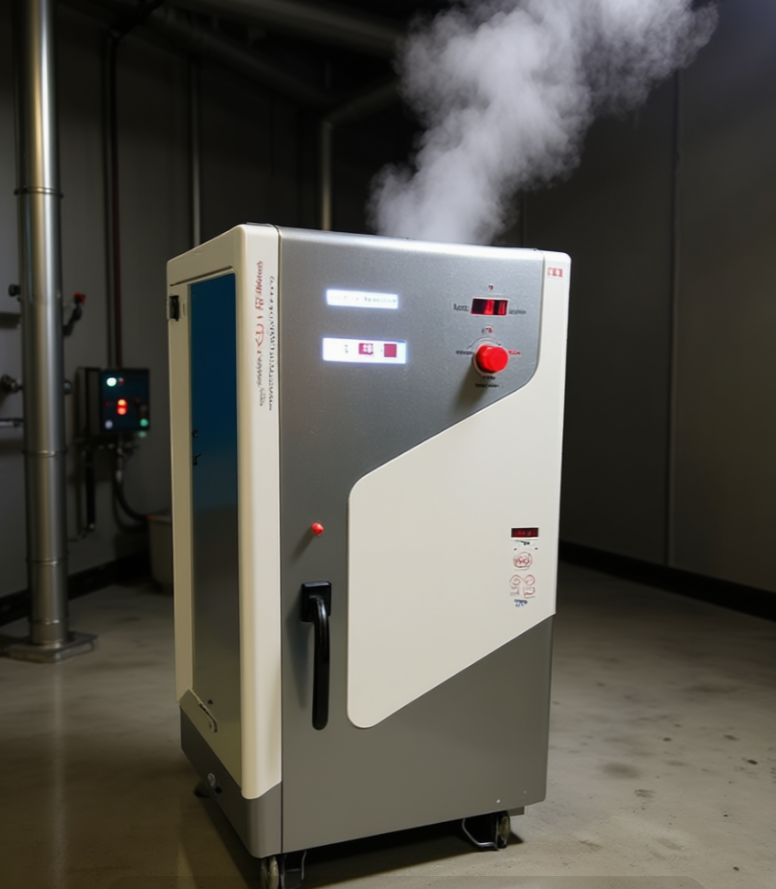
A steam generator is a device that heats water to its boiling point to produce high-temperature steam. Compared with traditional boilers, modern steam generators are more compact, heat up faster, and are easier to operate. They are widely used in industrial production, medical facilities, food processing, laboratories, and many other fields.
1. Working Principle
The basic principle of a steam generator is to heat water using a heating element, converting water into steam. According to the heating method, steam generators can be classified into:
Electric Steam Generators: Use heating tubes or resistive elements to heat water quickly, producing clean steam. They are commonly used in laboratories, food, and pharmaceutical industries.
Gas-Fired Steam Generators: Use natural gas, LPG, or other fuels to heat water, suitable for applications requiring large amounts of steam.
Oil-Fired Steam Generators: Use fuel oil for heating, often used where gas boilers are not available.
Modern steam generators usually feature automatic water filling, temperature control, and multiple safety protections, ensuring stable steam output while preventing dry burning or overpressure risks.
2. Key Features
Rapid Heating: Some electric steam generators can produce steam within minutes, far more efficient than traditional boilers.
Energy Efficient and Eco-Friendly: High-efficiency heating elements and intelligent control systems help reduce energy consumption and emissions.
Safe and Reliable: Equipped with water level detection, pressure control, and overheat protection.
Compact Design: Ideal for factories, laboratories, or small production lines with limited space.
Easy Operation: Simply connect the power and water supply, set the temperature, and the system runs automatically, reducing labor costs.
3. Applications
Due to their flexible operation and reliability, steam generators are widely applied in various industries:
Food Processing: Sterilization, cooking, baking, and equipment disinfection.
Medical Industry: Laboratory sterilization, high-temperature disinfection, and hospital laundry.
Chemical Industry: Heating reaction vessels, cleaning processes, and wet operations.
Textile and Dyeing: Fabric dyeing, steam setting, and equipment cleaning.
Beauty and Fitness: Steam saunas, spa steam rooms, and wellness facilities.
4. Buying Considerations
When selecting a steam generator, consider the following factors:
Steam Output: Choose appropriate power and capacity according to your needs.
Heating Method: Electric is suitable for small, fast applications; gas or oil is better for industrial-scale production.
Safety Features: Ensure the device has automatic shutdown, pressure control, and dry-burning protection.
Brand and After-Sales Service: Choose a reliable brand with good service to reduce maintenance concerns.
5. Conclusion
Steam generators are not only essential auxiliary equipment in industrial production and scientific research but also a convenient and efficient solution for modern life. With advancements in energy-saving and environmental technologies, steam generators are becoming more intelligent, energy-efficient, and eco-friendly, making them the preferred choice for many industries.